


Page 23 - Lariat Loop
P. 23
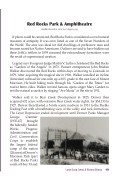
Red Rocks Park & Amphitheatre
RedRocksonline.com • ccclegacy.org
If places could be canonized, Red Rocks Park is considered a sacred natural museum of antiquity. It was once listed as one of the Seven Wonders of the World. The area was ideal for cli  dwellings of prehistoric man and became sacred for Native Americans. Outlaws are said to have hidden out there. Je Co settlers in 1859 assumed the extraordinary formations were the result of supernatural creation.
Legend says Evergreen Judge Martin V. Luther christened the Red Rocks as “Garden of the Angels” in 1873. Pioneer entrepreneur John Brisben Walker discovered the Red Rocks within days of moving to Colorado in 1879. After acquiring the magical site in 1906, Walker installed an incline (funicular) railroad for one-mile up a 60% grade to the east face of Mount Morrison. He built hiking trails through his “Garden of the Titans” for tourist burro rides. Walker invited famous opera singer Mary Garden to test the natural acoustics by singing “Ave Maria” at the site in 1911.
Walker sold it to Bear Creek Development in 1925. Denver then acquired 632 acres, with extensive Bear Creek water rights, for $54,133 in 1927. Denver then blasted a 5-mile scenic roadway in 1931 to the Pueblo Trading Post with a breathtaking view of the valley and rock formations. The Great Depression ended development until Denver Parks Manager George Cranmer
(1935-47) brought the federally funded Works Progress Administration and Civil Conservation Corps to establish the largest federal camp of the nation (20 acres) at Denver’s Morrison Park (part of Red Rocks Park) south of Hwy. 93 and
Lariat Loop Scenic & Historic Byway 19


